Posts

Resume Tips for Federal Jobs

Image
Over the last few months, I've had several students and colleagues ask about finding federal positions. I've put this short list of resources, tips, and ideas together. I hope it is helpful. 1.       Federal Resumes are just different —In the corporate world, brevity is key…but not for federal job hunting. The resume is structured differently, is often longer and more detailed, and includes much more than just work experience. Once you accept that, it will be a lot easier. 2.       Keep a master resume —A master resume is a running list of ALL the things you have done. This will better position you to “pick and choose” or highlight various aspects of your work, based on the job description and requirements in the announcement. 3.       Keep a running list of accomplishments —Time passes and we can forget, especially if a job announcement has a short deadline. Keeping a running list will help you recall what y...
MOVE-ing In the Right Direction

Image
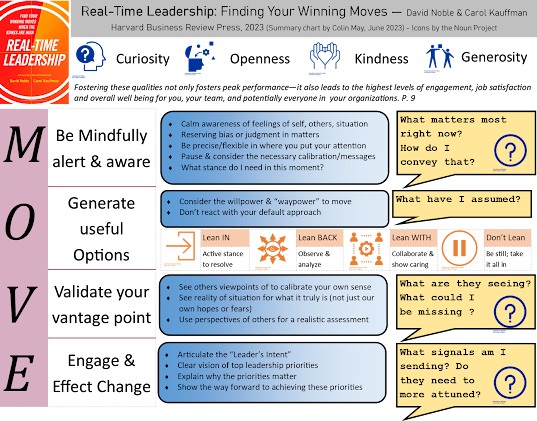
Early this year, a book was published by David Noble and Carol Kauffman called Real-Time Leadership: Find Your Winning Moves When the Stakes Are High (Harvard Business Press). David and Carol are both executive coaches and have an amazing storytelling ability in their book. I first heard Carol on the Coaching for Leaders Podcast and it was so intriguing that I purchased the book. After several delays, I was finally able to finish it this week.  Their book and cues for executive coaching are excellent and I appreciated their MOVE model for its ease and simplicity: M--Be Mindfully Alert O--Generate Options V--Validate Your Vantage Point E--Engage and Effect Change I especially appreciate their framework on the "Four Leans": Lean In  Lean Out Lean With Don't Lean I've created a summary here, but the book is an excellent and very insightful read. I highly recommend it. Note that I have not received anything for this, nor does the Amazon link below do anything for me finan...

Leadership Starts with Values...YOUR Values

Image
  The Center for Creative Leadership ( Leadership Development Results That Matter | CCL | Learn More ) published a short booklet in 2001 called “Setting Your Development Goals: Start with Your Values.” The authors, Bill Sternbergh and Sloan Weitzel, discuss the importance of setting value-based goals for your personal and professional growth. Starting with our values is a great first step in thinking through our leadership journey. It centers and grounds us—in ourselves. This is important because before we can lead others, we must first lead ourselves. We must model the behavior we expect from our peers, subordinates, and colleagues. The booklet includes a useful values exercise, which is something everyone should take. Google “values exercise” or “values leadership assessment” and you’ll find many ones that you can use. Once you are able to really identify your core values – which can be defined as those anchors or guides that inform our behavior at its most basic level – then...

My Philosophy on Mentoring

Image
 January is National Mentoring Month and I thought I would share my mentoring philosophy. This is something that I discuss with each mentee, but also I use it to remind myself why I believe so strongly in mentoring. I encourage everyone who is a mentor to write their philosophy down. It can be on a napkin, in a digital notebook, or a physical document. Regardless, take some time to think about what mentoring has meant to you and why you are a mentor. You may want to revise it periodically and update it -- after looking at mine (which is below), I should take my own advice!  Please share your mentoring philosophy or those nuggets that you've gained from mentoring experiences. It will help us all be the best mentors we can be. My Mentoring Philosophy I believe that mentoring is an essential ingredient to successful career growth and development, at any stage of our journey. I am the product of having wonderful mentors and sounding boards throughout my career. I see mentoring a...

Principles: Leading Yourself First

Image
What are your principles? Have you given them much thought? In many organizations, especially law enforcement agencies, we don’t do a stellar job of training our first-line supervisors in leadership OR management. It is not fair to those who have been selected, but it is also not fair to the employees. You don’t want to get six months (or more) into a supervisory position only to discover that supervision is not something you want to do. Training supervisors in many agencies is a little like being put into a dark room, not being familiar with where things were, and trying our best to turn on the light. Many new supervisors are faced with those challenges—some have even been told, “you’ll learn it on the job.” But what if we were able to utilize a principles-based leadership training system to help smooth that transition? Leading through principles – and having the training, development, and organizational succession planning structure to support this effort -- is essential to givin...

Developmental Goals and Experiences for Mentoring

Image
I have written extensively on the value of mentoring, both as a mentor and a mentee ( here and here for Fraud Magazine and here for the ACFE Blog ). Throughout my career, my journey has been positively influenced by so many wonderful people—both through formal mentoring programs and informal mentors. One question I often get is about how a mentee can gain experience to be able to obtain the requisite knowledge and work history to gain a position in the fraud, investigation, or law enforcement profession. Some are from students who are looking for their first career position after college, while others are transitioning from one industry to another, or rejoining the workforce after having a family or helping older parents. Those who are in the field may be interested in moving into supervisory or leadership positions, which also come with different experiential requirements. This is where a mentoring relationship can be extraordinarily valuable; the mentor can be a sounding board...

Law Enforcement Social Media: A Leadership Imperative

Image
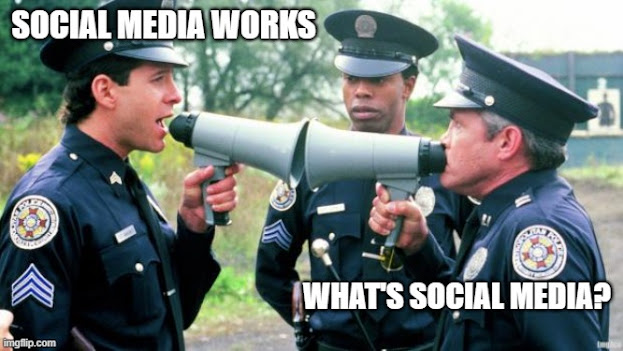
  Many police agencies are on social media -- but are they being utilized effectively as a strategic communications platform? And are agency leaders aware of how important they are, and what opportunities (and risks) they present? An astounding number of people are now on social media platforms; the We Are Social 2022 report for the United States indicates that users on average spend just over seven hours a day on the internet or social media. It may sound like a lot, but compared to some other countries (South Africa clocks in at 10 hours, 46 minutes and Mexico at eight hours, 55 minutes), apparently we do other stuff. Leaders can use these statistics to help understand the social media environment and how they can chart a social media strategy for their agency. Law enforcement can use social media to support many of their activities and operations. Not fully understanding social media, the platforms, and expectations of the public can pose risks to law enforcement agencies a...